
When did more become better?
The real lesson from Uber's AI budget blowout story

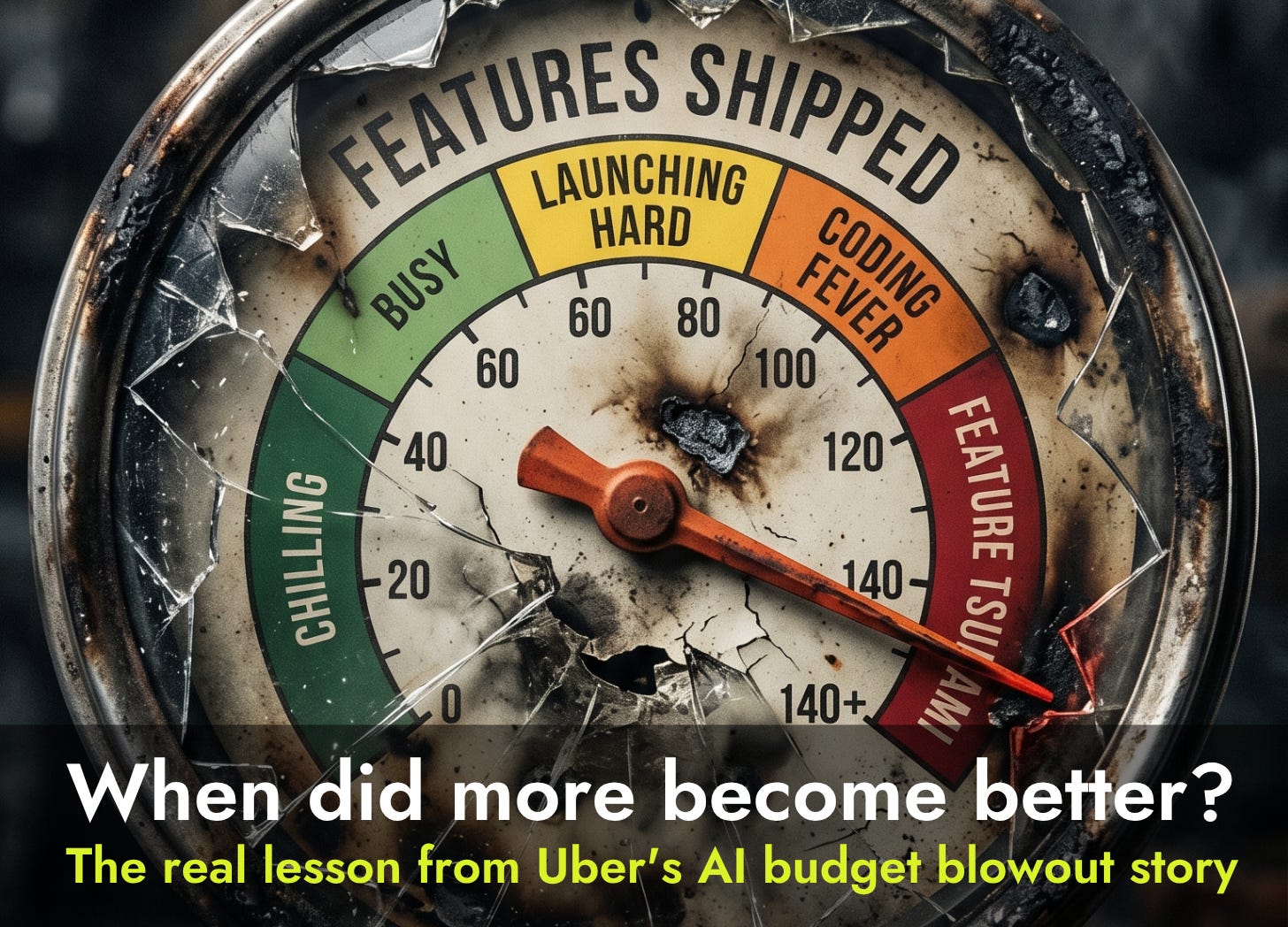
Uber’s C-suite just said out loud what most companies are thinking silently.
They burned through their entire 2026 AI budget in four months. Their COO can’t draw a line between token spend and actual value delivered. And their engineers were being ranked on AI usage, which predictably turned into a tokenmaxxing contest that wasted resources and frustrated people.
Refreshingly honest. This is what good leadership looks like: Naming mistakes, owning them, so you and others can learn from them.
But one thing the COO said deserves more attention than it’s getting.
He wished they could say the AI rollout helped them ship 25% more consumer features, but he simply can’t.
That’s the aspiration. More features, faster.
That framing is broken.
Shipping more. Quantity. How can shipping more be a reasonable business goal?
Shipping the right things should be the goal.
Launching features that solve no real user problems just because you got faster at generating code doesn’t create value. It creates clutter. It creates cognitive load. It creates products that do more and mean less.
I’ve spent 25+ years in tech watching teams confuse velocity with progress. AI doesn’t fix that confusion. It turbocharges it.
The companies that will win aren’t the ones running a feature crank-out machine. They’re the ones making better decisions about what to build in the first place and having the discipline to say no to everything else.
The Uber story isn’t a cautionary tale about AI tools. It’s a cautionary tale about borrowing the narrative that more output equals more value and not questioning whether that’s true.
It isn’t.